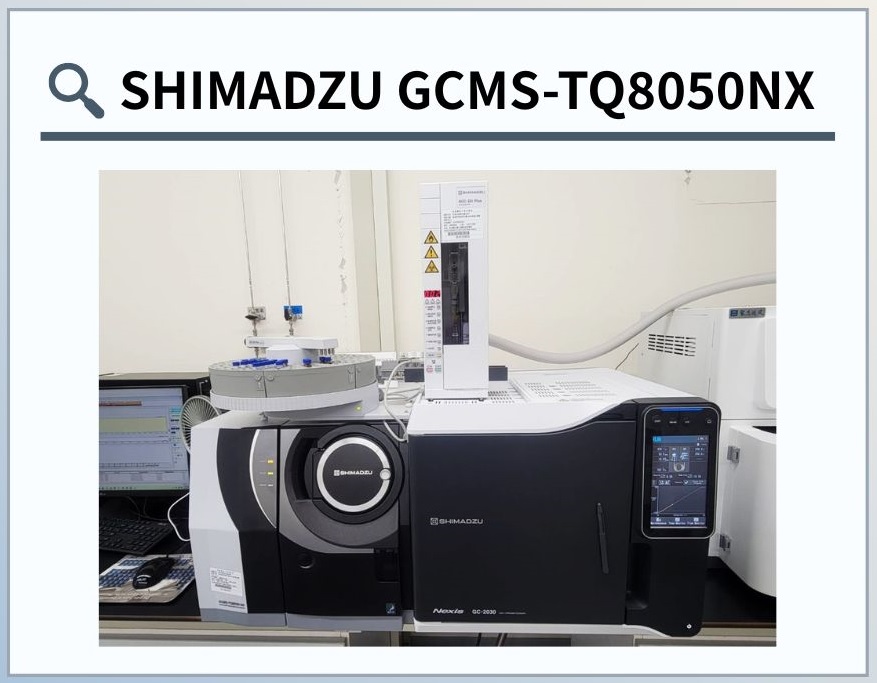
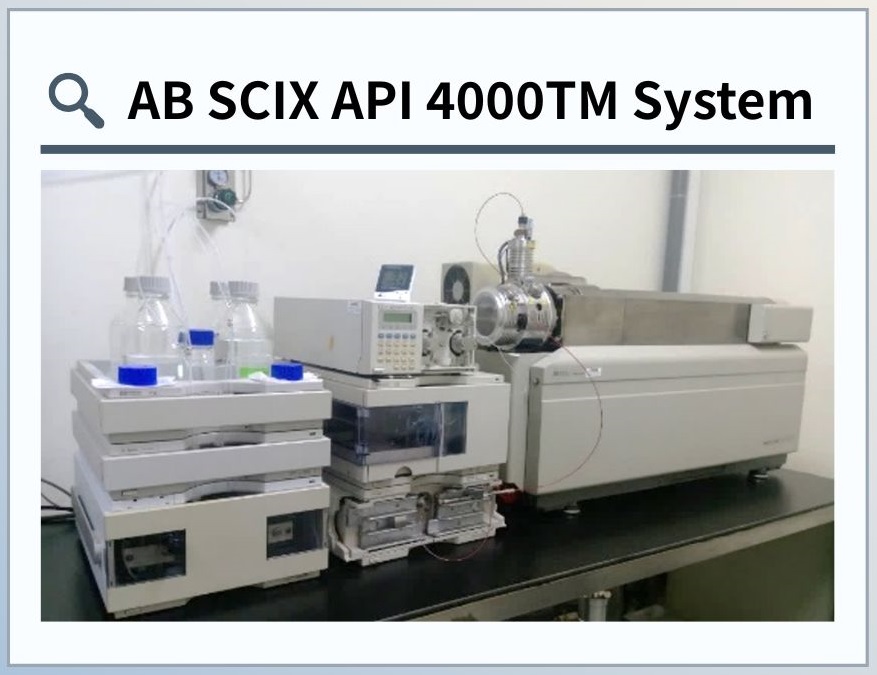
Liquid chromatography-tandem mass spectrometry (LC-MS/MS) is an advanced analytical instrument which is particularly well-suited for the separation, identification, and quantification of analytes in complex matrices. The fundamental principle of LC–MS/MS involves injecting the sample into the LC system, where it is carried by a mobile phase—typically a mixture of water and organic solvents—into a chromatographic column. Analytes in the sample are separated based on their differential affinities toward the stationary phase and mobile phases, resulting in their elution at distinct retention times. After chromatographic separation, the analytes enter the ion source of the mass spectrometer, where they are ionized into charged molecules. These ions are subsequently transferred to the mass analyzer, where they are separated and detected according to their mass-to-charge ratio (m/z), generating a mass spectrum that records the m/z values and corresponding signal intensities. Furthermore, the selected precursor ions can undergo further fragmentation to generate product ions. This fragmentation process provides valuable structural information of the analytes and contributes to enhanced resolution and analytical specificity.
LC–MS/MS offers multiple data acquisition modes: 1) Full Scan mode, which allows the detection of all ions within a selected m/z range. It can offer a broad view of the sample composition and enable the identification of unknown compounds. 2) Selected Ion Monitoring (SIM) mode, which focuses on detecting specific target ions by monitoring only selected m/z values. This targeted approach increases sensitivity and is ideal for quantifying known compounds in complex samples. 3) Selected Reaction Monitoring (SRM) mode, which monitors specific precursor-to-product ion transitions, offering high selectivity and a superior signal-to-noise ratio. It is widely used for precise quantification of target analytes, especially in complex biological or environmental matrices.
With its exceptional sensitivity and resolution, it is widely applied in areas such as pharmacokinetics, environmental pollution analysis, human biomonitoring, food safety assessment, and clinical diagnostics, serving as a critical analytical platform in biochemistry, pharmaceutical sciences, and environmental science."
【Contract Information:Dr. Yu-Ming Hsu (Phone: 2318; Mail: maiz538272@gmail.com)】
|
|
Test Category
|
Item for Analysis
|
Pricing
|
|
1
|
Urinary melamine
|
Melamine
|
- Non-KMU staff: NT $1,500 per sample
- Company from innovation incubation center: NT $1,350 per sample
- KMU staff: NT $1,200 per sample
|
|
2
|
Urinary metabolites of phthalates
|
MMP, MEP, MiBP, MnBP, MEHHP, MECPP, MOHP, MCMHP, MbzP and MEHP
|
- Non-KMU staff: NT $3,000 per sample
- Company from innovation incubation center: NT $2,750 per sample
- KMU faculty: NT $2,500 per sample
|
|
3
|
Urinary metabolites of benzene and toluene
|
S-Phenylmercapturic Acid (SPMA), t,t-Muconic acid (TTMA), Thiodiglycolic acid (TDGA), Phenylglyoxalic acid (PGA) and Mandelic acid
|
- Non-KMU staff: NT $2,000 per sample
- Company from innovation incubation center: NT $1,800 per sample
- KMU faculty: NT $1,600 per sample
|
|
4
|
Urinary metabolites of acrylamide
|
Acrylamide (AA), Glycidamide (GA), N-Acetyl-S-(2-carbamoylethyl)-L-cysteine (AAMA) and N-(R,S)-Acetyl-S-(2-carbamoyl-2-hydroxyethyl)-L-cysteine (GAMA)
|
- Non-KMU staff: NT $2,000 per sample
- Company from innovation incubation center: NT $1,800 per sample
- KMU faculty: NT $1,600 per sample
|
|
5
|
Qualitative analysis for organic compound
|
|
- Non-KMU staff: NT $1,200 per hour
- Company from innovation incubation center: NT $1,050 per hour
- KMU faculty: NT $900 per hour
|
|
6
|
Customized analytical method development
|
|
- To be discussed depending on the type of analyte and sample.
|