
【Research Highlights】Reduce the Risk of Urolithiasis by Minimizing Phthalate Exposure (PhD student Shih-Ting Huang, Professor Chia-Chu Liu, Professor Ming-Tsang Wu)
2025 / 05 PhD student Shih-Ting Huang, Professor Chia-Chu Liu, Professor Ming-Tsang Wu
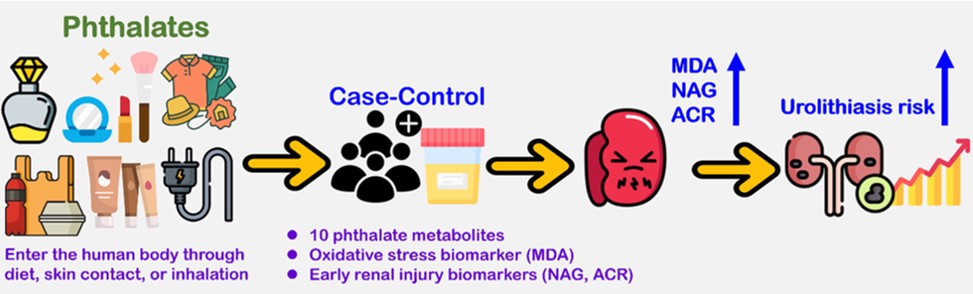
Fig. 1. Schematic illustration of the association between phthalate exposure and the risk of urolithiasis.
The Hidden Ubiquity of Phthalates
Phthalates, also known as plasticizers, are a class of chemical compounds commonly added to plastic products, with phthalate esters such as DEHP being the most widely used. Their primary function is to enhance the flexibility and durability of plastic materials. Due to their versatile applications, phthalates are nearly ubiquitous in modern life, found in items ranging from food packaging, beverage bottles, and children's toys to medical devices. However, a growing body of research has indicated that phthalates may disrupt the human endocrine system, adversely affect reproductive health and child development, and are potentially associated with metabolic disorders and kidney damage. While plastic products bring convenience to daily life, it is important to remain aware of the potential health risks posed by these invisible chemical threats.
Urolithiasis and Oxidative Stress: The Hidden Damage
Urolithiasis refers to mineral crystal masses that form within the urinary system, such as in the kidneys or ureters. Approximately 80% of urinary tract stones contain calcium, most commonly in the form of calcium oxalate or calcium phosphate. Their formation is not only related to increased concentrations of minerals in the urine but also involves localized inflammation and cellular injury within the kidneys. Recent studies have shown that oxidative stress, caused by excessive production of reactive oxygen species (ROS), plays a key role in the formation of kidney stones. When the kidneys are exposed to internal diseases or external environmental factors that trigger an overproduction of ROS, oxidative stress can lead to inflammation and damage of kidney cells. This damage causes cells to shed and form debris, which can serve as a nidus for crystal aggregation, further promoting the onset and advancement of urolithiasis.
Phthalates and Renal Injury: New Findings from a Case – Control Study
Phthalate metabolites are primarily filtered and excreted by the kidneys, which has raised concerns about their potential nephrotoxicity. Against this backdrop, we aimed to clarify whether phthalates encountered in daily life could induce oxidative stress, lead to early renal injury, and consequently increase the risk of urolithiasis. To investigate this hypothesis, our team conducted a case–control study measuring the urinary concentrations of ten common phthalate metabolites, along with markers of oxidative stress (malondialdehyde, MDA) and early renal injury indicators [N-acetyl-beta-D-glucosaminidase (NAG) and albumin/creatinine ratio (ACR)].
In this study, phthalate metabolites were categorized into two groups, high-molecular-weight and low-molecular-weight phthalates (the sum of high-molecular-weight phthalate metabolites; the sum of low-molecular-weight phthalate metabolites), to calculate their total concentrations. Additionally, the daily intake of di-2-ethylhexyl phthalate (DEHP) metabolites was estimated to comprehensively assess exposure levels.
The results revealed significant differences between patients with urolithiasis and healthy controls. Urinary MDA concentrations were significantly higher in urolithiasis patients, and both NAG and ACR levels were also markedly elevated compared to the control group, indicating more severe oxidative damage and early renal injury. In addition, the concentrations of most phthalate metabolites were higher in patients with urolithiasis than in controls, reflecting greater cumulative phthalate exposure. Further analysis showed that nearly all phthalate metabolite concentrations were significantly positively correlated with MDA, NAG, and ACR, indicating that higher phthalate levels in the body are associated with increased oxidative stress and early renal injury. Even after adjusting for potential confounding factors such as age, sex, and lifestyle, the sum of high molecular weight phthalate metabolites, the sum of low molecular weight phthalate metabolites, and the daily intake of DEHP remained consistently associated with an increased risk of oxidative stress, early renal injury, and urolithiasis. These findings provide direct human evidence supporting the hypothesis that phthalate exposure may induce early kidney injury and increase the risk of urolithiasis.
Key Message and Recommendations: Reducing Phthalate Exposure to Protect Kidney Health
This study is the first to reveal an association between phthalate exposure and the risk of urolithiasis. Since phthalates are widely present in the environment and everyday products, exposure is difficult to avoid completely. The research team recommends taking practical steps in daily life to reduce exposure by choosing products that are free of phthalates whenever possible and maintaining adequate hydration to help eliminate phthalates from the body and lower the risk of urolithiasis formation. Vulnerable groups—such as pregnant women, children, patients with urolithiasis, and individuals with kidney disease—should be especially vigilant in minimizing their phthalate exposure. Although this study provides important preliminary evidence, larger-scale research is needed to clarify the causal relationship and underlying mechanisms. More robust evidence in the future will help support this link and provide policymakers with a scientific basis for developing relevant public health policies and regulatory measures aimed at reducing phthalate use and exposure, thereby lowering their potential nephrotoxic risks.
More Information:
Huang ST, Hsieh TJ, Lee YC, Wu CF, Tsai YC, Chen CC, Li SS, Geng JH, Hsu YM, Chang CW, Tsau YH, Huang SP, Juan YS, Wu WJ, Wu MT*, Liu CC*. Phthalate exposure increases oxidative stress, early renal injury, and the risk of calcium urolithiasis: A case-control study. Ecotoxicol Environ Saf. 2024 Nov 15;287:117322. (SCIE, IF2023: 6.2, 7/106=6.6% in Toxicology)
